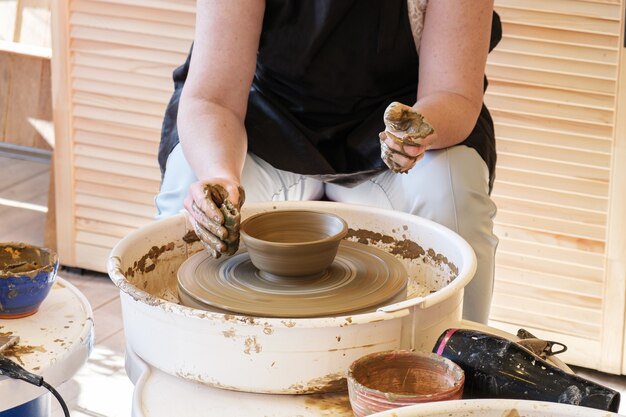
The sound of the pottery wheel is unmistakable—a low hum beneath the scrape of tools and the occasional crack of clay hitting a work surface. Inside a converted industrial space, hands are submerged in water, thumbs pressing into spinning clay, shoulders bent over the eternal task of coaxing shapeless material into form. This is where Augusta's pottery community has found its center.
What began as a modest effort to reclaim a neglected neighborhood corner has grown into something far larger: a gathering place where people of all skill levels come to make things with their hands, to fail and try again, to belong to something tangible.
The studio's rise reflects a broader hunger in the community. In a city where much of the focus falls on larger cultural institutions and downtown development, a grassroots art space filled with working kilns and clay dust has captured something people didn't know they were missing.
The shift happened gradually. What started as a few dedicated potters sharing equipment and workspace evolved into regular classes, open studio hours, and a waiting list of newcomers wanting to learn. The momentum built on word of mouth—the most reliable currency in any arts community. Friends brought friends. Families came together. People who had never touched clay before signed up alongside those with decades of experience.
The studio occupies what was once warehouse space, the kind of raw industrial shell that exists in most older neighborhoods. Rather than polish it into something sleek and gallery-like, organizers kept the bones of the building intact. Exposed brick remains. The concrete floor is stained with slip and clay dust. Windows face the street, and passersby can see the work happening inside—unvarnished, unglamorous, real.
In many American cities, pottery studios and craft spaces have become rarities. High rents, landlord indifference, and the decline of manufacturing have hollowed out the physical infrastructure that once supported working artists. Augusta has been no exception. The emergence and growth of a pottery studio offering affordable access to kilns, wheels, and instruction represents a countercurrent to that trend.
For the community, it offers something practical: a place where you can learn a skill, make art, and spend time with others doing the same. There are no screens here, no passive consumption. The work demands presence. It demands failure and persistence.
The studio has also become a quiet anchor for its neighborhood. The people who come to throw pots or hand-build vessels often stay to browse local coffee shops, grab a meal nearby, or simply walk around. A thriving arts space creates the kind of activity and energy that makes a street feel alive.
The studio survives on a mix of class fees, studio membership, and the unpaid labor of people who believe in the work. Organizers describe their mission in straightforward terms: to make pottery accessible, to build community, and to sustain a craft that feels increasingly precious in a world that discards rather than makes.
Instructors range from full-time professional potters to artists who teach to keep their own practice alive. The students span ages and backgrounds. Some come for the meditative quality of the work. Others arrive looking for a creative outlet they've lost over years of desk jobs. Still others simply want to build something and hold it in their hands when they leave.
What binds them is the clay itself—its resistance, its forgiveness, its refusal to be rushed.
As the studio's reputation has grown, so have its challenges. More demand means more classes, more kiln time, more space. Organizers continue to search for ways to sustain the operation while keeping classes affordable and the space accessible.
The pottery renaissance happening in Augusta is not unique to this city. Across the country, people are returning to making things. But in Augusta, it has taken root in a particular way—in a converted warehouse, in a neighborhood that needed it, among people who showed up and never left. The wheels keep turning. The kilns stay warm. The community keeps growing.